Press Enter

Let’s be honest – calibration probably isn’t the most exciting items on your to-do list. 


It’s easy to push it out a week, or even a month. The equipment seems fine. The numbers are close enough and nothing is actively on fire (production hasn’t stopped). But, that’s exactly how the problems start. 


On paper, skipping a calibration might seem harmless. But that short-term thinking can quietly snowball into some of the most expensive problems your business can face.


When calibration gets delayed or worse, skipped altogether, the impact usually isn’t immediate. There is no dramatic shutdown or flashing warning light. Instead, small inaccuracies start to build quietly in the background, until one day, they affect quality, compliance, and day-to-day operations in ways that are far more expensive than the calibration itself.
 

When "Close Enough" Isn't Good Enough

In regulated and precision-driven industries, calibration issues don’t start as big problems. They start as tiny inaccuracies. 


A temperature sensor that’s off by a few degrees. A pressure gauge reads just outside the expected range. A flow meter starts reporting values that are close, but not quite accurate. 


On their own, these shifts might seem minor.  But in environments where precision matters (and let’s face it, that’s most industrial and regulated settings), those small gaps don’t stay small.


They stack. They spread. And left unchecked, eventually, they can compromise product quality, they can lead to inaccurate reporting, and equipment performance issues that become harder to trace over time.
 

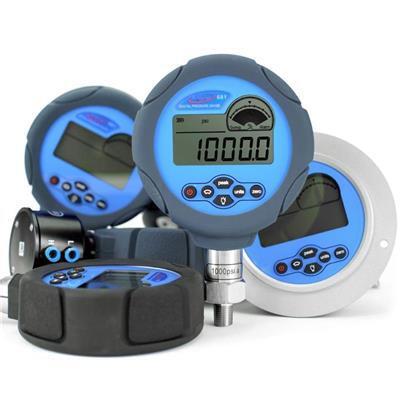
681 Digital Pressure Gauge 07936

The Hidden Cost of Downtime

When something finally does go wrong, it rarely happens at a convenient time.

 
Production stops. Teams scramble. Everyone is trying to figure out what changed, what failed, and how far the issue goes.


And here’s the frustrating part: calibration is often at the root of it. Uncalibrated or out-of-tolerance equipment leads to unreliable readings, and once trust in the data is gone, everything slows down. And now, you aren’t just fixing an instrument… you’re questioning the entire process! At that point, the cost goes beyond the instrument itself.


What’s often overlooked is the costly chain reaction:


•    Missed deadlines/production targets 
•    Delayed shipments 
•    Overtime labour costs 
•    Strained customer relationships 


A single calibration issue can disrupt an entire operation, especially in facilities that rely on continuous production.  


That “saved time” from skipping calibration disappears pretty quickly.
 

Product Recalls: The Risk That Lingers

One of the most serious consequences of poor calibration is the potential for product recalls.


If measurement instruments are inaccurate, there’s no guarantee that products meet required specifications. In industries like pharmaceuticals, life sciences, food and beverage, or other regulated sectors, that’s a serious problem. That’s where the risk becomes more serious. A single uncalibrated device can compromise a batch, invalidate testing, or create quality concerns that aren’t discovered until the product has already moved downstream.


And recalls don’t just involve pulling products off shelves. They come with:


•    Investigation and root cause analysis 
•    Regulatory reporting 
•    Disposal or rework costs 
•    Damage to brand trust 


No one wants to explain that a costly recall came down to a sensor that hadn’t been calibrated on schedule.
 

Pharma manufacturing

Compliance Isn't Getting Any Looser

Meeting regulatory requirements means being able to prove that your equipment is performing accurately and consistently.


Organizations like Health Canada, FDA, and ISO all place strong emphasis on calibration traceability, documentation, and quality control. During an audit, “we meant to schedule it” doesn’t carry much weight.
 

Compliance requirements continue to tighten across industries. Auditors expect documented proof that equipment is calibrated, traceable, and performing within defined limits.


Skipping or delaying calibration can lead to failed audits, production shutdowns, corrective actions or even fines, depending on the situation.  That’s a steep price for something that could have been prevented with a proactive calibration schedule.


More importantly, once compliance issues are identified, companies often face increased scrutiny moving forward. This could mean more audits, more documentation, and less operational flexibility.
 

Certification and standards

Data Integrity Starts with Calibration

Reliable data is the foundation of good decision-making.


When instruments aren’t calibrated, the data they produce becomes questionable. That can impact everything from quality control to process optimization and reporting.


In regulated environments, compromised data integrity can invalidate entire batches or studies. Even outside of strict regulatory frameworks, it leads to poor decisions based on inaccurate information.


Simply put: if you can’t trust your data, you can’t trust your process. And that’s a tough hole to dig out of. 

Calibration as a Strategic Investment

It’s easy to look at calibration as just another expense. But that’s missing the bigger picture. In reality, it’s a form of risk management. 


A well-executed calibration schedule helps:


•    Maintain consistent product quality 
•    Reduce unplanned downtime 
•    Ensure compliance readiness 
•    Protect brand reputation 


It also creates confidence Confidence that your instruments are reading accurately. Confidence that your process is under control. Confidence that when an auditor asks for records, they’re there. And confidence that the product leaving your facility meets the standard your customers expect.


More importantly, it keeps small issues from turning into big ones. 

Alpha Lab 236

Skipping calibration might feel harmless in the moment, but it introduces uncertainty into systems that depend on precision.


And uncertainty is expensive.


When it catches up to you, it tends to do so all at once – through downtime, compliance issues, product loss, and a long list of avoidable costs that no facility wants to absorb.


Calibration isn’t about ticking a box. It’s about keeping your operation on track, your data reliable, and your risks under control.


Cutting corners here rarely saves money. It just delays the bill. And unlike some surprises in business, this is one you can actually plan for.